
Paediatric First Aid Course: Essential Training for 2026
Quick Summary: Irish employers caring for children need specialised paediatric first aid training that covers child-specific emergencies like choking, seizures, and burns. Courses should include practical scenario practice and be tailored to settings like creches and schools. Proper planning, record-keeping, and refresher training ensure staff are prepared and compliant for 2026.
If you run a creche, school, after-school club, or mixed workplace in Ireland, one choking event, febrile seizure, or allergic reaction can show fast whether your team has the right Paediatric First Aid skills. Many employers still confuse a general First Aid Course with Child First Aid, and that gap creates risk.
This guide fixes that. It explains when Paediatric First Aid is needed, how it differs from Emergency First Aid, and what to check before you book a First Aid Course. It covers First Aid Training, Certification, refresher requirements, online limits, and where Child First Aid, Paediatric Safety Training, and workplace courses are applicable..
Built for Irish employers, this is a practical Paediatric First Aid guide for 2026, not guesswork.
Table of Contents
What Paediatric First Aid Covers in 2026
Child emergencies require specialized responses. Babies and young children have smaller airways, faster breathing rates, and can get worse quickly. The HSE provides distinct guidance for infants and children on choking, burns, poisoning, and CPR, demonstrating why Child First Aid differs from adult first aid. Ireland's PHECC guidance emphasizes a dedicated pediatric section, so training should focus on child-specific emergencies, not just general workplace courses.

If staff care for children, adult-only first aid training leaves a real gap.
A paediatric first aid course teaches the skills most likely to matter in childcare, schools, sports, and family settings. Main topics typically covered include:
- Scene safety and quick child assessment
- CPR for babies and children
- Choking response for infants and older children
- Bleeding, burns, and fractures
- Seizures, asthma, anaphylaxis, and poisoning
- Recovery position and when to call 112 or 999
Skill area | Why it matters for children |
|---|---|
CPR | Technique changes by age and chest size |
Choking care | Infant and child steps are different |
Medical emergencies | Asthma and febrile seizure risks need fast action |
Communication | Children may not explain pain clearly |
The HSE CPR guide sets out age-specific steps, including different hand placement and compression methods for babies versus children (HSE child and baby CPR guide). That is why Child First Aid training must be practical, current, and refreshed.
When Irish Employers Need Paediatric First Aid Training
Irish employers need paediatric first aid training when children are part of the service, not as an afterthought. The trigger is usually risk, supervision, and the type of setting.
For early years services, Tusla is clear. Tusla recognises PHECC FAR as the course that meets child first aid rules. It expects at least one FAR-trained person to be available at all times.. That matters for crèches, preschools, Montessori settings, and afterschool services linked to early years provision.
Employers should check:
- who is on site for every shift
- cover for breaks, leave, and trips
- expiry dates on certificates
- whether the risk assessment supports current numbers
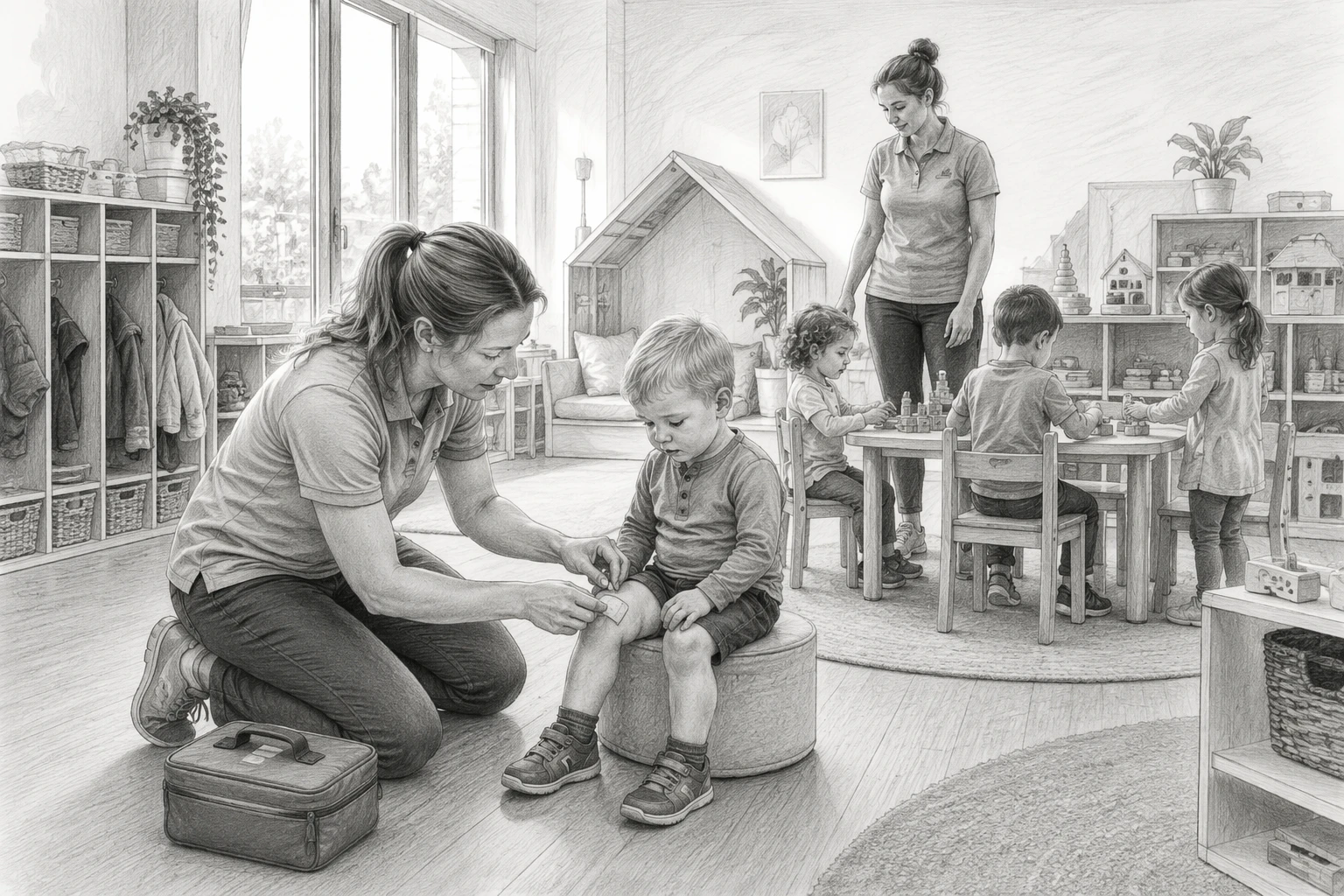
If one trained person covers the full service, gaps appear fast during lunch, illness, or outings.
For schools, clubs, and child-facing workplaces, the need is often driven by duty of care and safeguarding risk rather than one simple rule. Tusla lists schools, education settings, and organisations providing recreational, leisure, social, or physical activities to children as relevant services under the Children First Act framework, as shown in Tusla’s relevant services guidance. The HSA also states that FAR is the recognised standard for occupational first aid in workplaces.
A simple employer check looks like this:
Setting | Paediatric first aid likely needed? | Why |
|---|---|---|
Crèche or preschool | Yes | Children present all day |
Primary school | Yes | Daily child contact and incidents |
Sports club | Yes | Activity and injury risk |
Family attraction | Usually | Child visitors and staff contact |
Paediatric First Aid vs PHECC FAR and Workplace First Aid
Paediatric first aid focuses on babies and children. It covers child CPR, choking, seizures, burns, allergic reaction, and common childhood illness and injury. Tusla recognises PHECC FAR as meeting Ireland’s child first aid requirements. Always have at least one FAR-trained person present..
PHECC FAR is broader. It is the Irish standard for occupational first aid and also covers adults and children. The HSA states FAR has replaced the old Occupational First Aid course as the workplace standard, and the course runs for at least 18 contact hours in HSA guidance.

Qualification | Main purpose | Best fit |
|---|---|---|
Paediatric first aid | Child-focused emergencies | Creches, schools, kids clubs |
PHECC FAR | Workplace and general responder needs | Most Irish employers |
Workplace first aid policy | Your internal cover plan | Any employer managing risk |
To choose well, start with your risk assessment.
- Pick PHECC FAR if you need recognised workplace cover in Ireland.
- Add paediatric-focused training if staff mainly care for children.
- Check shift cover, leave cover, and site layout before booking.
If your team works with children and adults, one course alone may not cover every real risk.
What the Best Paediatric First Aid Course Should Include
A strong course should teach more than basic CPR. It needs child-specific skills, clear decision-making, and real practice. The HSE lists key child emergency topics such as CPR, choking, burns, poisoning, cuts, and heavy bleeding in its first aid guidance for babies and children. For employers, the course should cover:
- Infant and child CPR
- Choking response for babies and children
- Bleeding, burns, fractures, and head injuries
- Seizures, asthma, allergic reactions, and poisoning
- Scene safety, emergency calls, and handover
Scenario work matters just as much as the theory. Staff should practise:
- A choking infant in a childcare room
- A child with a head bump on a playground
- An asthma or anaphylaxis incident
- A calm handover to emergency services
If learners do not practise with manikins and live scenarios, the course is too weak for workplace use.
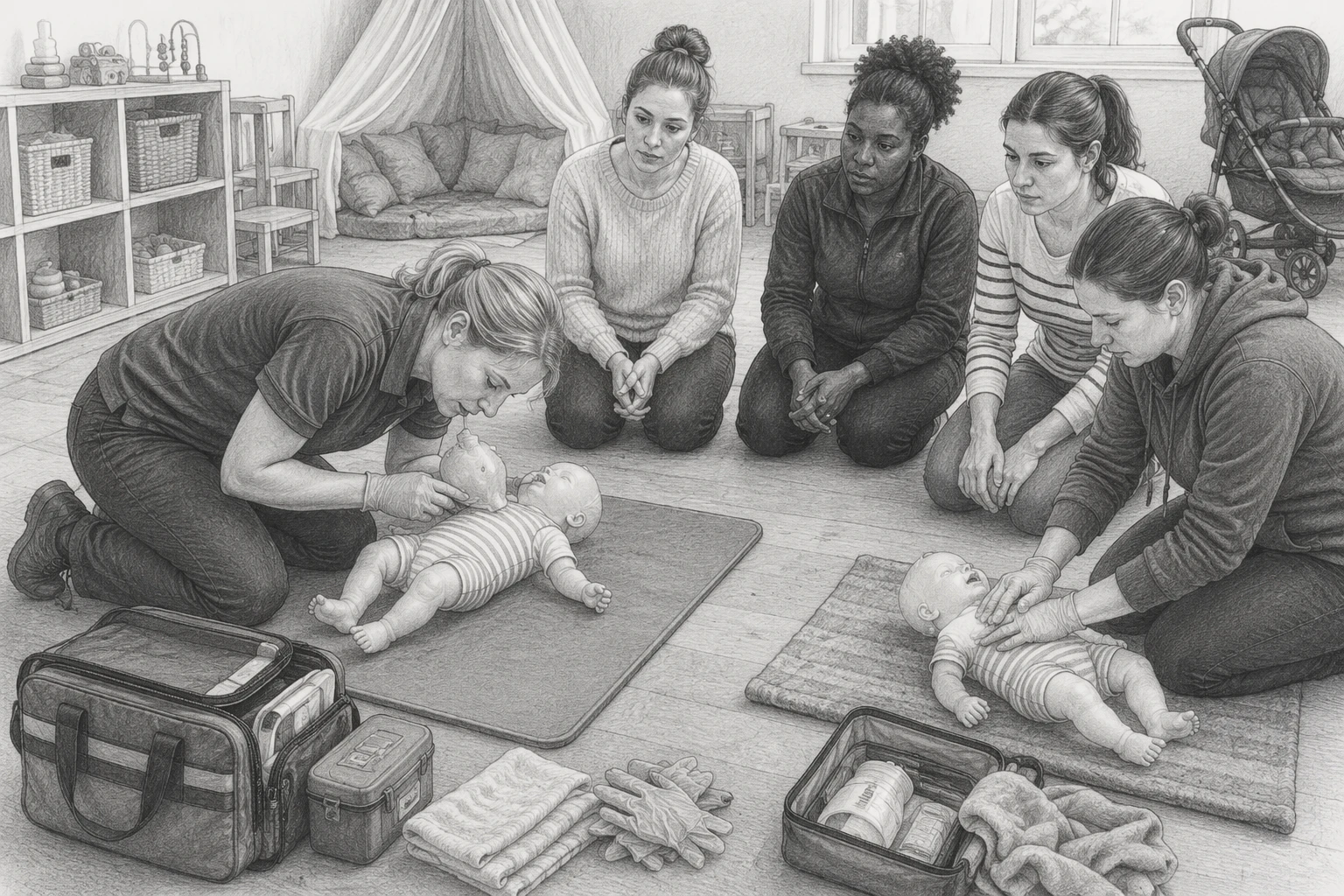
Delivery should be simple and practical. PHECC says new 2026 responder standards now include First Aid Essentials - Paediatric First Aid within its education and training standards. That makes provider choice more important.
Use this checklist when comparing courses:
Course feature | What to look for | Why it matters |
|---|---|---|
Format | In-person or blended with practical skills | Children’s first aid needs hands-on practice |
Duration | Enough time for skills, scenarios, and questions | Short sessions often rush core topics |
Assessment | Practical assessment plus tutor feedback | Confirms staff can act, not just listen |
Certification | Clear issue date and renewal cycle | Helps with training records and audits |
How to Implement Training Across Your Organisation
Building first aid cover into staffing plans
Start with your risk assessment and map cover by site, shift, role, and child contact. In Ireland, the HSA says first aid provision should reflect staff numbers, hazards, layout, shift work, and distance from medical help, and foreseeable leave must be covered in advance, not treated as an exception HSA first aid FAQ. Tusla also expects at least one person with recognised First Aid Response training to be available to children at all times in early years settings Tusla guidance.
- Assign trained staff across all opening hours
- Build backup cover for annual leave, sickness, and turnover
- Prioritise rooms, outings, and higher-risk activities
- Name deputies for each key area
Do not leave cover to one long-serving employee. If they are off, your plan fails.
Keeping records, refreshers, and compliance current
Use one live register for certificates, expiry dates, trainer details, and location of trained staff. Set alerts at 120, 90, and 30 days before expiry. This avoids rushed bookings and gaps in cover.
A simple tracking table helps:
Record | What to log | Review point |
|---|---|---|
Staff certification | Course date, expiry, provider | Monthly |
Shift coverage | Named first aider by shift/site | Weekly |
Incident logs | Treatment given, follow-up needs | After each case |
- Check records after recruitment, rota changes, or site moves
- Rebook recertification early
- Keep digital copies ready for audits or inspection
Guardian Safety can help if you want onsite delivery and one provider across several locations.

Need compliant paediatric first aid training for 2026? Guardian Safety helps Irish employers book flexible, QQI-certified courses, stay audit-ready, and train staff onsite, online, or on demand.
Frequently Asked Questions
Q1: What are the key topics covered in Guardian Safety's Paediatric First Aid Course for 2026?
Core topics include infant and child CPR, choking, bleeding, burns, seizures, allergic reactions, shock, head injuries, asthma, anaphylaxis, recovery position, emergency planning, and incident reporting for childcare settings.
Q2: How does Guardian Safety's paediatric first aid training align with Ireland's legal requirements for childcare providers?
It supports employer compliance by covering childcare first aid duties, emergency response, record keeping, and staff readiness. Employers should still match course content and certification to their sector rules and risk assessment.
Q3: What are the latest updates in paediatric first aid guidelines for 2026 in Ireland?
Expect stronger focus on refresher training, documented competence, emergency planning, and quick response to choking, cardiac arrest, and severe allergic reactions. Providers should review guidance regularly and update internal procedures.
Q4: Why is paediatric first aid training essential for teachers and childcare workers in Ireland?
Children can decline fast. Staff need confidence to act in the first minutes before emergency services arrive. Training also lowers risk, supports safeguarding, and helps employers show a clear duty of care.
Q5: What qualifications and certifications does Guardian Safety offer for paediatric first aid in Ireland?
Guardian Safety offers recognised health and safety training options suited to workplace and childcare needs. Employers should confirm course level, duration, renewal cycle, and whether the certificate fits their compliance needs.
Q6: How can Irish childcare facilities benefit from Guardian Safety’s flexible online paediatric first aid courses?
Flexible delivery helps managers train more staff with less disruption. It can reduce travel time, simplify scheduling, support refresher learning, and help multi-site employers keep training records more consistent.
Q7: What are the benefits of City & Guilds and CPD accreditation for paediatric first aid courses in Ireland?
These accreditations can strengthen credibility, show structured learning, and support staff development records. For employers, they also make it easier to compare providers and justify training choices during audits.
Q8: What practical skills are taught in Guardian Safety’s paediatric first aid training for 2026 compliance?
Learners practice CPR, choking response, casualty assessment, recovery position, bleeding, burns, seizures, and emergencies..
Conclusion
Paediatric first aid matters when your staff care for children, not just adults. For Irish employers, the key point is simple: match training to the real risk, the setting, and the children in your care. Early years services must meet specific first aid duties under the Early Years Services Regulations 2016, while general workplaces follow HSA first aid rules and risk assessment standards in the HSA first aid guidance. The best course is one that fits your site, covers child-focused emergencies, stays current, and is tracked properly. Good records, refresher planning, and the right provider keep your team ready and your compliance position clear.